Explore groundbreaking research and practical strategies that harness the power of photography
to make science accessible, engaging, and meaningful for all learners—especially multilingual
students and diverse communities.
Six foundational principles that guide our approach to visual science education
📸
Visual Documentation
Photography and visual media transform abstract science concepts into tangible, accessible learning experiences that connect classroom content to students' lived experiences.
🌍
Cultural Responsiveness
Leveraging students' cultural backgrounds, community knowledge, and home languages as assets in science education creates more equitable and engaging learning environments.
💭
Student-Centered Inquiry
Moving from teacher-directed instruction to student-driven investigation empowers learners to ask questions, gather evidence, and construct their own understanding of phenomena.
🗣️
Multimodal Communication
Supporting multiple ways to access, process, and express scientific thinking—through images, text, speech, and action—makes science learning accessible to all students.
🔍
Phenomena-Based Learning
Grounding instruction in observable, personally relevant phenomena motivates authentic investigation and helps students see science as a tool for understanding their world.
🤝
Equity & Access
Ensuring all learners—particularly multilingual students and those from diverse communities—have the support, resources, and high expectations needed to succeed in science.
💬
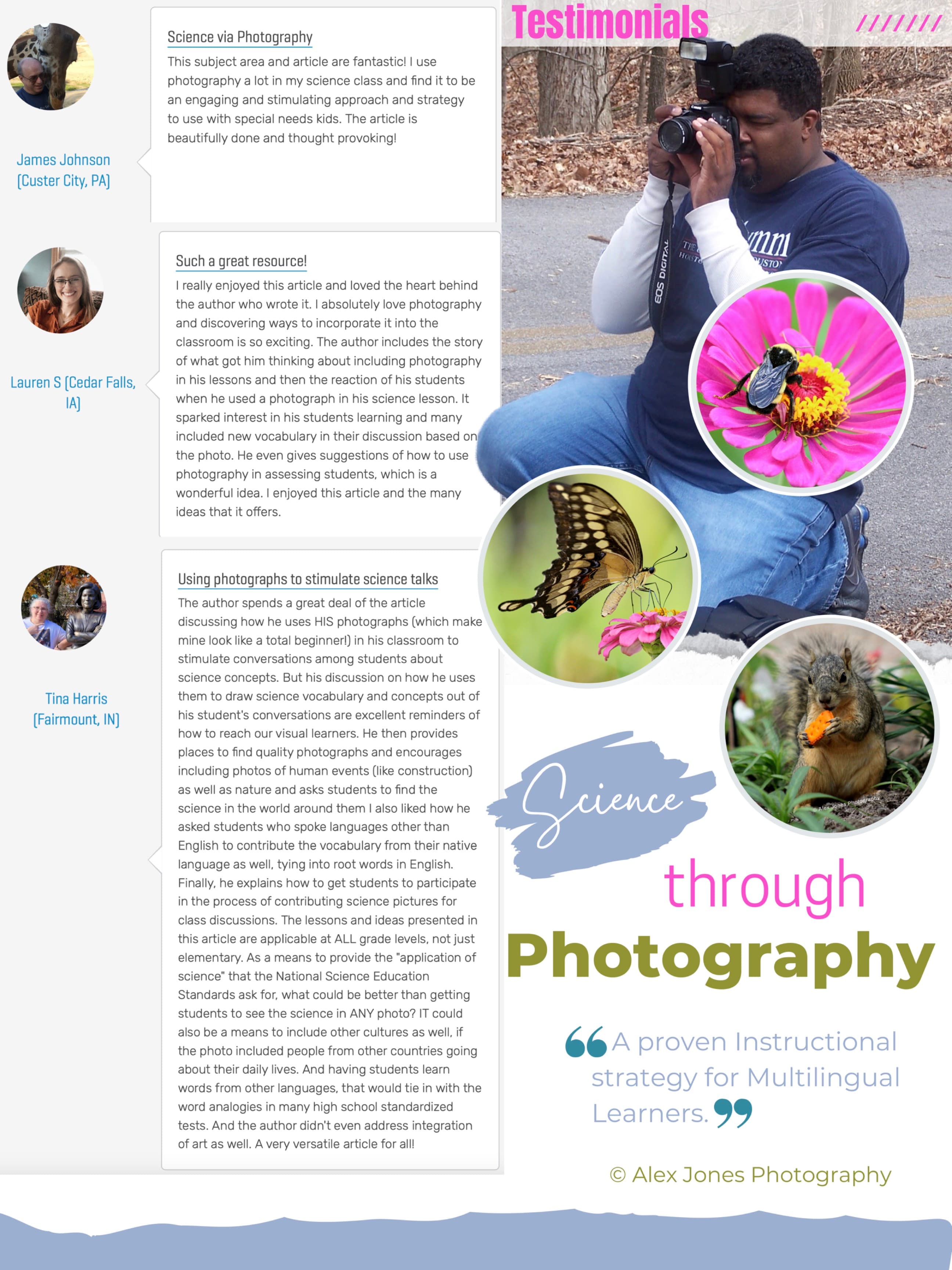
Testimonials
Research
Featured Resources
Evidence-based strategies for visual science learning
How Does a Driving Question Board Promote the Shift from 'Learning it' to 'Figuring it Out'?
This article explains how a Driving Question Board (DQB) serves as a visual reference tool to help students and teachers track learning progress throughout a science unit.
"The Driving Question Board serves as a visual reference to focus students' attention, record what they have learned, show where they have been and where they are going."
Activate Learning IQWST
Multilingual Learners as Scientists: The Synergy of NGSS and WIDA
This article demonstrates how the Next Generation Science Standards (NGSS) and WIDA 2020 Standards work together to support multilingual learners in science education.
"Science is all around us. Science is on a medicine bottle, condensation on your window, dish soap bubbling up in hot water, oil splattering in a frying pan."
Dr. Ruslana A. Westerlund & Dr. Emily Adah MillerCESA 2 Language & Culture Center
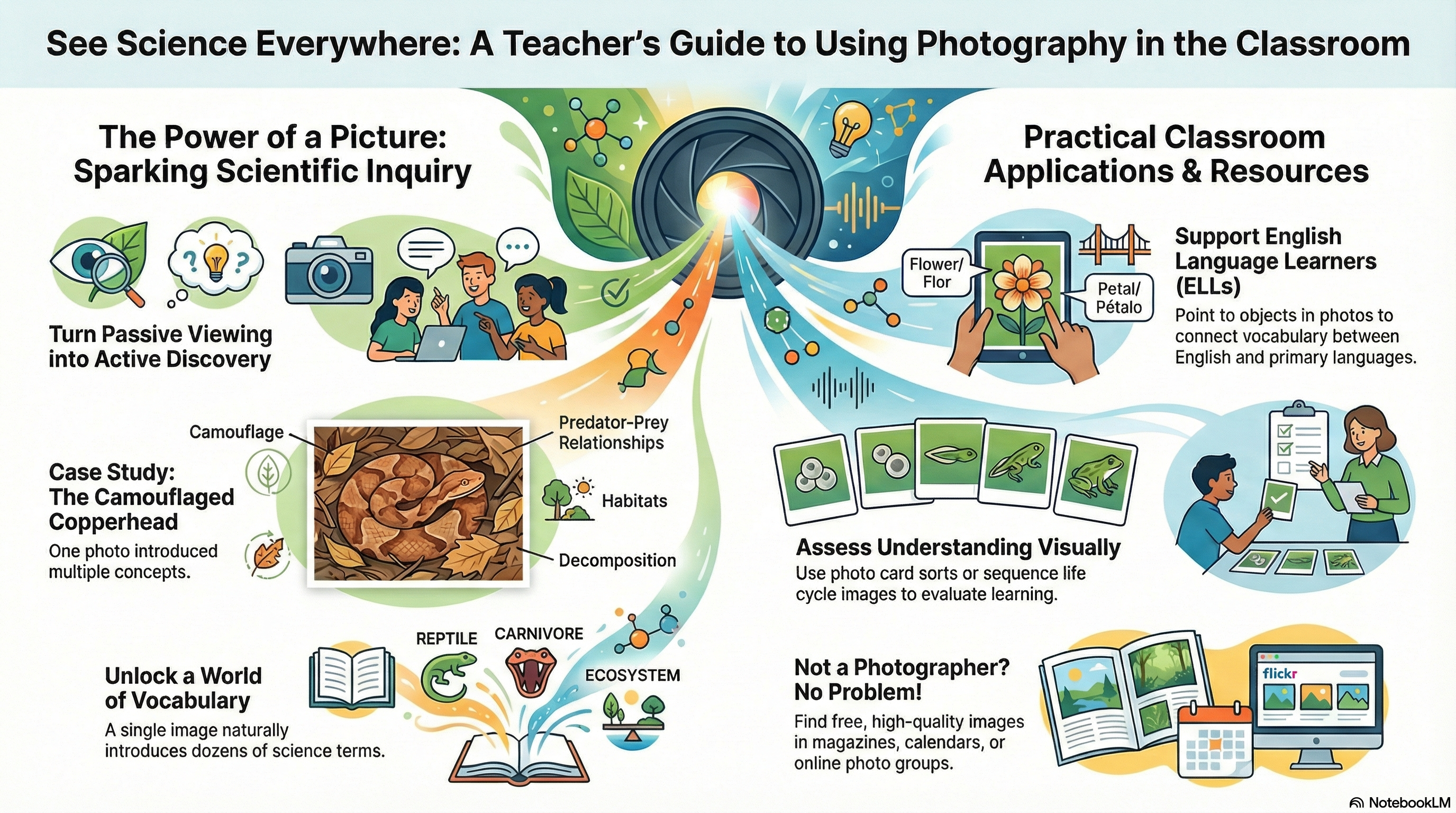
Science via Photography: Using digital media to enhance animal adaptation and diversity lessons
This article describes how educators can use photography to enhance science lessons about habitat and adaptation.
Photography in teachingVisual literacyVocabulary development
"The photographs are breathtaking, the possibilities are endless, and your students will truly see that science is everywhere."
Alex D. JonesScience and Children, January 2010
How to launch STEM investigations that build on student and community interests and expertise
This STEM Teaching Tool explains the self-documentation strategy, where students use photo documentation to identify personally compelling phenomena from their everyday lives.
"There are literally millions of potentially interesting things in the world to see, to do, to learn about. But they don't become actually interesting until we devote attention to them."
Philip Bell, Deb Morrison & Angela DeBargerSTEM Teaching Tool #31, November 2015
Vision and Blueprint for English Learner Success
This document presents a comprehensive vision and blueprint for English learner education, organized around four pillars: School Culture, Access to Educators, Opportunity and Support, and A Plan for Future Success.
English learner successAsset-based teachingFamily engagement
"English learners are taught by effective, well-prepared, and culturally responsive educators who hold them to high standards and have the resources and professional learning they need."
Department of Elementary and Secondary Education
Quick Reference Guide: Phenomena in the Classroom
This guide clarifies what phenomena are in science education and how to use them effectively. It explains that a scientific phenomenon is an observable event that students can investigate.
"Teaching with phenomena is providing students with an authentic experience that engages students in asking questions and then establishing evidence of the content principles."
Dept. of Elementary and Secondary Education, June 2019
As Schools Brace for More English Learners, How Well Are They Being Served Now
This investigative article examines how school districts across the United States are serving English learners amid growing enrollment and teacher shortages.
English learner enrollmentTeacher shortagesResource allocation
"Smaller class sizes give children time to talk."
Jo NapolitanoThe 74 Million, April 25, 2023
How Does a Driving Question Board Promote the Shift from 'Learning it' to 'Figuring it Out'?